PowerPoint quiz show lesson

(Social-Distancing teaching)

Hmmm…

Toss a coin…

So… in the “social-distancing” era of ESL teaching how are you adapting?

Personally… I didn’t go back to teaching in classrooms until June 1st. You’d think I’d have a long time to strategize how to approach lessons going forward… but I also have a toddler. Excuses aside though I have massively changed my teaching style.

Really… every parent had very realistic expectations about working from home…

The teaching style that I developed over my time in Japan was centered on student’s teaching each other. Lots of group work and communication activities. I liked letting students get an objective that required them to get more information via verbal communication. So they would form questions, ask those questions, and then record what they learned. Then they would disseminate that data and share it.

Buuuuut… group work is not an option. Students are allowed to work in pairs, but desks have to remain around 60cm apart from each other. To be frank I think it is unnecessary. All the students are wearing masks. If we have COVID spreading the current precautions we are taking probably aren’t going to halt its spread. Students still hang on each other during breaks. They still talk in close groups and touch each other. They have to remove their masks to eat. They walk home together. They play and hang out after school and on weekends. I digress.
19 Social Distancing Memes & Coronavirus Jokes! | The Travel Tart Blog
yeah… baby

With the social distancing handicap I’ve moved on towards using the very thing I’ve railed against for years. PowerPoint.

Now I’ve covered my issues with PowerPoint before and I won’t rehash those now. (Full disclosure I totally did write a lengthy rehashing, then read it, realized I probably have unhealthy issues and the 4 of you who will actually read would be bored so I deleted it…) But for all the problems I have with PowerPoint it can be an extremely useful tool, if used right.
Design a powerpoint presentation by Iniebininie
Can I get this icon in cornflower blue?

I make heavy use of animations in my PowerPoint presentations. Here are some that I’ve made with corresponding worksheets. Basic premise is making activities based on Japanese quiz/game shows in style. So far student participation is 100%, though only because I make each row stand up. I don’t love these lessons, but the kids enjoy them so far and while speaking and active communication time is drastically cut only because 1 on 1 and conversation within groups are now not possible given the parameters necessitated by COVID19.


My 3rd year students missed the last month of school so the teacher asked me for an activity for them to practice using passive voice as it was confusing them. TBH I dislike passive voice and I think it’s importance is overstated by Japanese English curriculum.

Starting off we warmed up with this passive voice quiz. Students all stand. I read the verbs and they would raise their hands to say either the past tense past participle. Then I would reveal the answer by rolling the animation and the students would write it on their worksheets. After students answered we would play Rock-Paper-Scissors and if they won then they could pick a friend to sit down. If they lost then only the student who answered could sit.

Next is the quiz/game/activity PowerPoint. If you run through the slideshow it’s easy to see how I ran the activity because I explain it visually in the PowerPoint.


My 2nd year students have broken into their 2nd year curriculum and we did similar quiz game as a class.
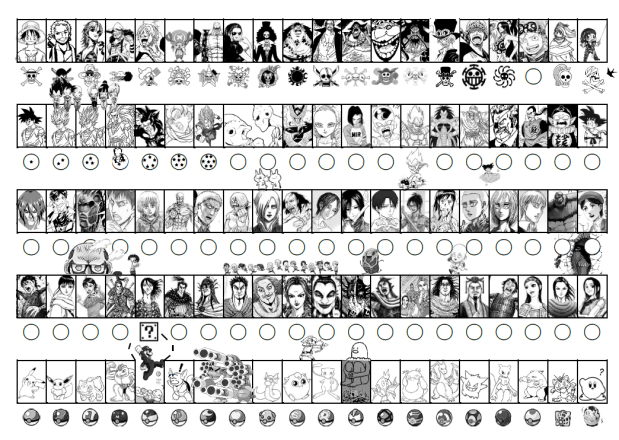

Sticker Sheets

I use sticker sheets in all my classes. The students get one sticker sheet during my first lesson when they are first year students. They can use this sheet for all three years of JHS. I do however offer new sheets at the beginning of second and third year for any students who lost the old sheet, their old sheet was damaged, or they just want a fresh copy.

I also offer prizes to the students. The prizes are small pictures I print, laminate, and cut. I tend to vary the amount of stickers needed to get a certain type of prize based on popularity. I will alter these prices over time as I revise the sticker sheets.

I used to make these in Photoshop, but Microsoft Word is fine and easy to make uniform sized pictures. I use the tables as guidlines and crop the images to fit.

I am providing you with the most recent PDF of my sticker sheet. You can also download the Word Doc I used to make it. The sticker sheets of the past I originally made in Photoshop, but making them in Word means alterations can be done quickly and on school computers. Some schools don’t allow personal laptops and I doubt any schools have computers capable of running Photoshop. The quality takes a dip, but after the end result is printed off and run through a bulk copier you won’t notice.


One word of advice is to always save your finish document as a PDF to print from. If you have a Word Doc with a lot of images the printing will sometimes be misaligned and you’ll have fractured shapes, tables, and images. Saving as a PDF and then printing condenses the information so your poor school computers can handle the work.

Because of budget…

For JHS teachers sticker sheets go well with rewarding winners of activities, volunteers that speak in class, etc. Make sure you JTE agrees to use it and you acknowledge how it will be used, before you make copies. I leave it up to the individual JTEs so they can give out stickers also if they want. Most choose to use it as something we only use when doing ALT lessons.


Warning on ES

For elementary school students be wary of using stickers. For 5th and 6th year students there should be no issue, but younger students may be driven to tears if they don’t get at least one sticker in the class. I don’t suggest using stickers at all in ES if you’re there full time, but if you only visit the school a few times a year then it would be alright as long as you bring enough stickers for everyone, and give everyone a chance to earn one. Like at the last 5 minutes of class you can ask, “Who has no sticker?” and then those students can be asked a simple question from the lesson or just ask them their name. Try to let them feel like they earned the reward. So make sure you budget enough time at the end of class.

OK, Boomer…

Stickers are cheap off of Amazon. I like to use the Emoji stickers. My schools have an English budget so I tell them what to get, but even if they didn’t I would buy them myself.


This is the most recent sticker sheet. The PDF is good to print now. The DocX file should be used to customize your sheet as you like with whatever you are personally intersted in. Sometimes I’ll stick pictures of the teachers in it. Copy paste your image. Scale it down. Then place it where you like. Send the image to the back so it’s behind the guidelines of the table. Then crop it down to fit. You can merge and split cells as you like. If you don’t know how to do that it’s not hard. I suggest just switching between solid and blank lines instead of deleting cells altogether.

The King Game

I thought that it would be interesting to see the process I go through taking old materials and digitizing them.

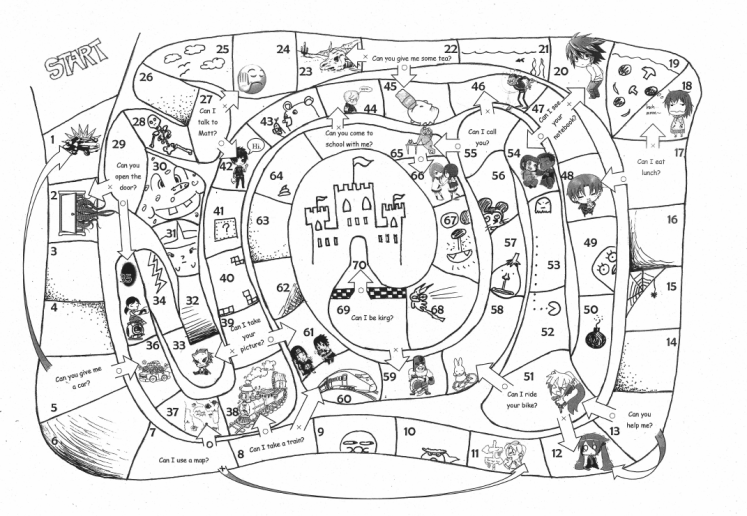
This is the original I made. I hand drew the board and used clip art and MS Word to add grapics, text, and numbers.

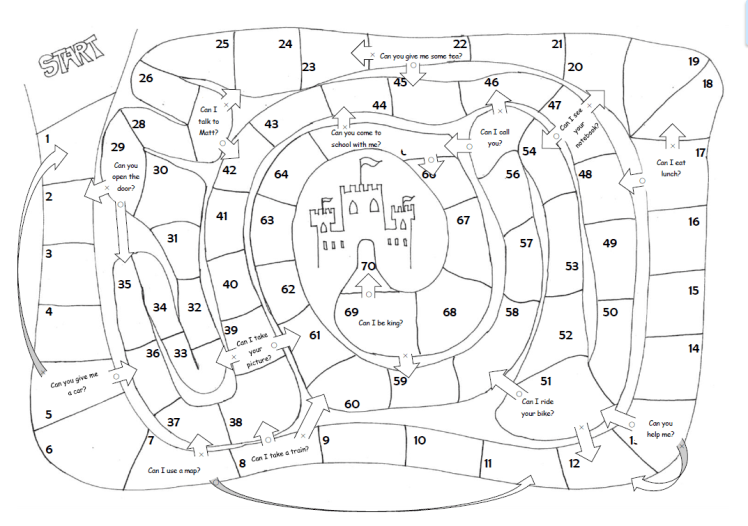
This is the image without grapics, and this is the one I used as the base for the digital version.

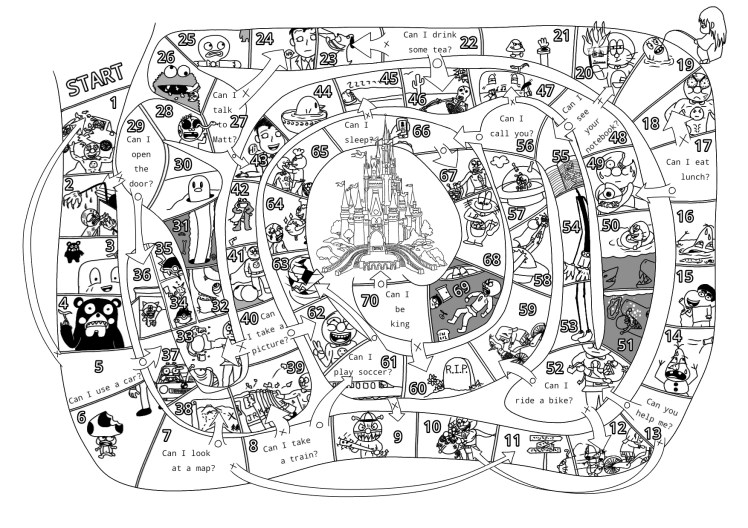
This is a video of me drawing from start to finish on my Samsung tablet. I used an app called Ibis Paint X that is free. All the elements are now hand drawn. Some of the images are from other things I’ve drawn that I then imported and redrew so it would look cohesive. The castle alone I traced from a coloring book image, I can draw decently, but that level of detail would’ve taken me hours to come up with something comparable.


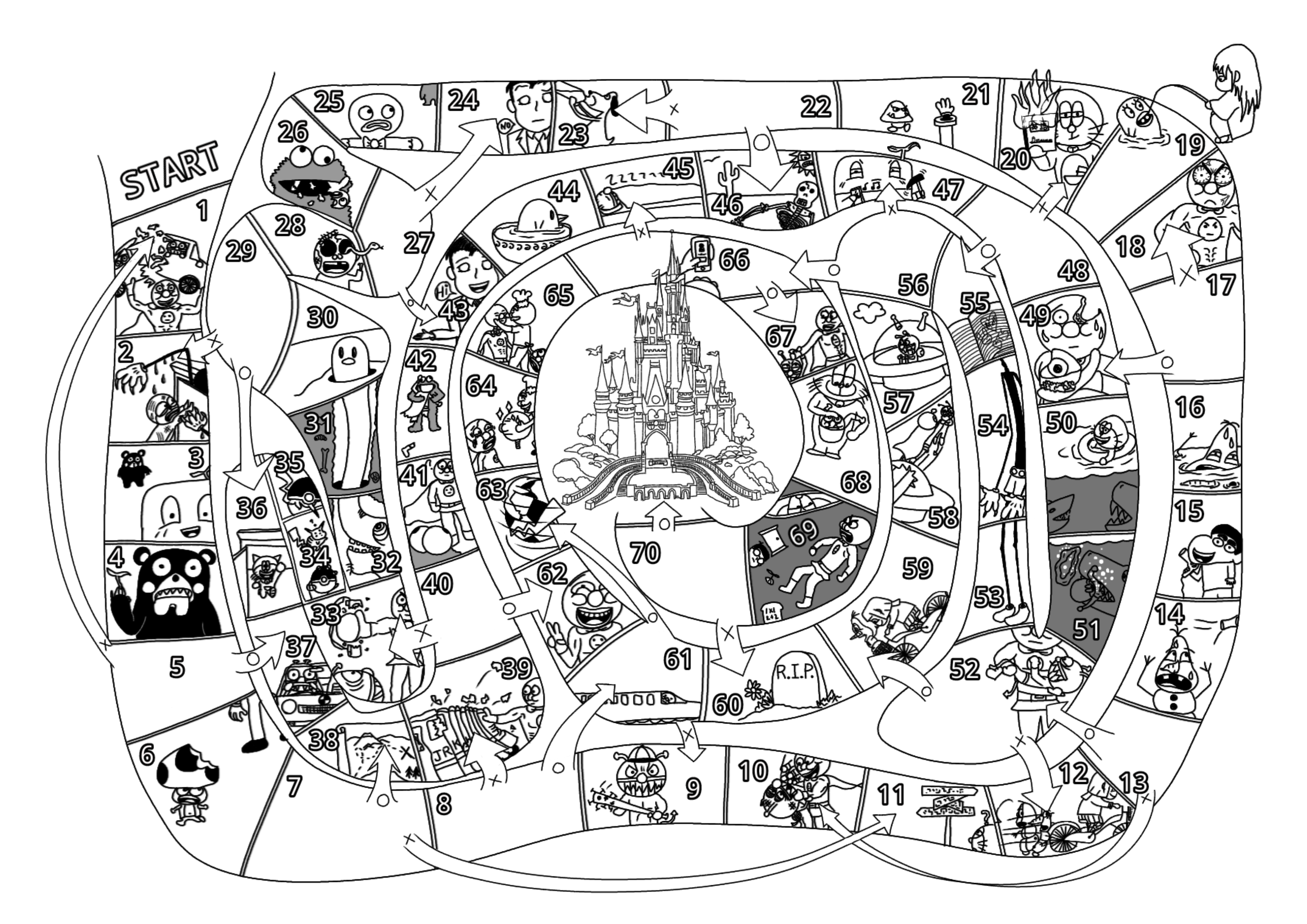
Here is the finished product.

Here is a blank template you can fill in your own questions. I would suggest downloading it and then drop it into microsoft word and use text boxes to add your own questions.

How to play the King Game

Here is a detailed lesson plan for the King Game. It can be used for 1st year students studying, “Can I~?” / 2nd year students studying, “May I~?” / and 3rd year students studying, “Could/Would you~?”