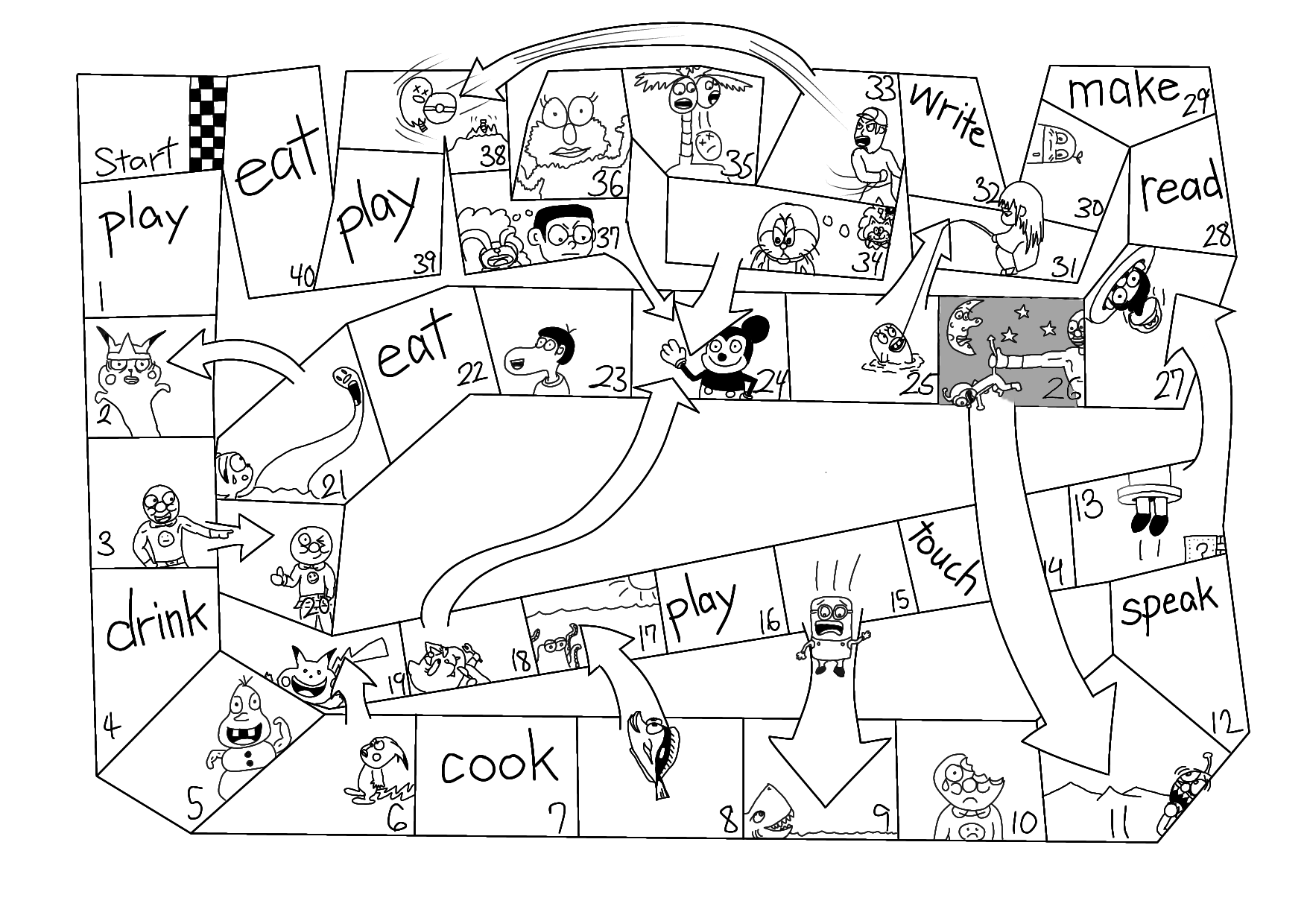
This is an example of my most heavily used activity. The details will differ slightly, but essentially, I want the students to
Ask a question
Listen to the answer
Remember the answer and share that answer with their group
Understand the answer as a group
Write out a sentence using the information they learned from the answer
Relay that information to a 3rd party.
This lesson is marked for the end of JHS first year, so students by this point should be comfortable enough talking to you 1-on-1, and if they’re not then this is the practice they may need. I don’t always make the students ask questions and listen to answers individually, but when the pattern is so cut and dry like this with zero variables for the question I believe it is more than fair to expect them to be able to solo the Q&A.
But you can alter the methods and worksheets as you see fit.
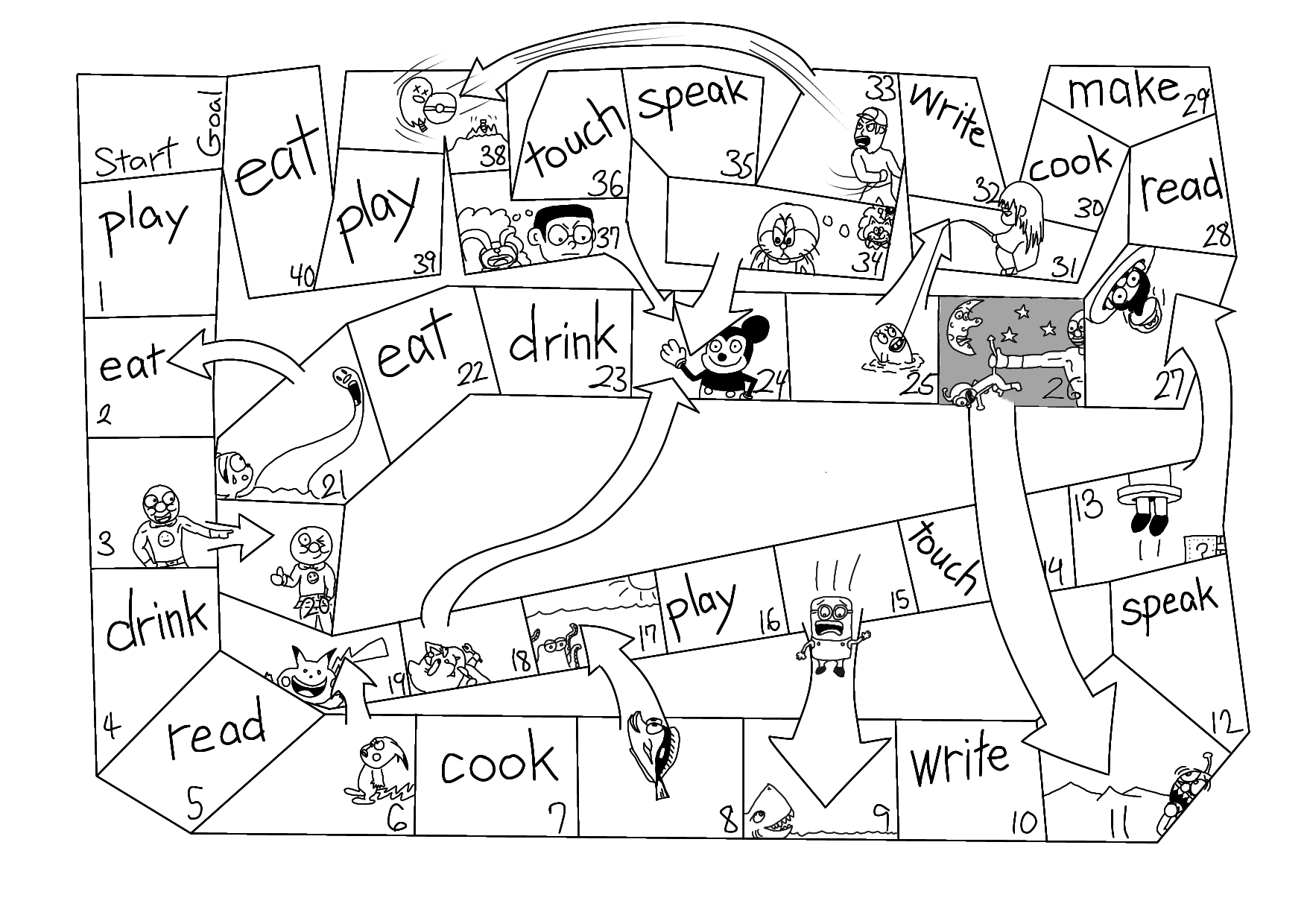
This is a follow up lesson to the I can snakes and ladders lesson plan. It uses the same activity and game, but grammar is changed to question form, and the game is changed due to this. I will provide the lesson plan, the worksheet, and a new snakes and ladder game sheet modified to slow down the game some.
This is a kind of lesson I do with snakes and ladders that keeps the students working in groups, but also frequenly having the teacher’s check their work. It works fairly well in even the most difficult classes I have.
This is a fun lesson I do with my first year students. Lessons similar to this work well to get full classrooom envolvement. I have a similar lesson for the second year students when they learn, There is and There are.
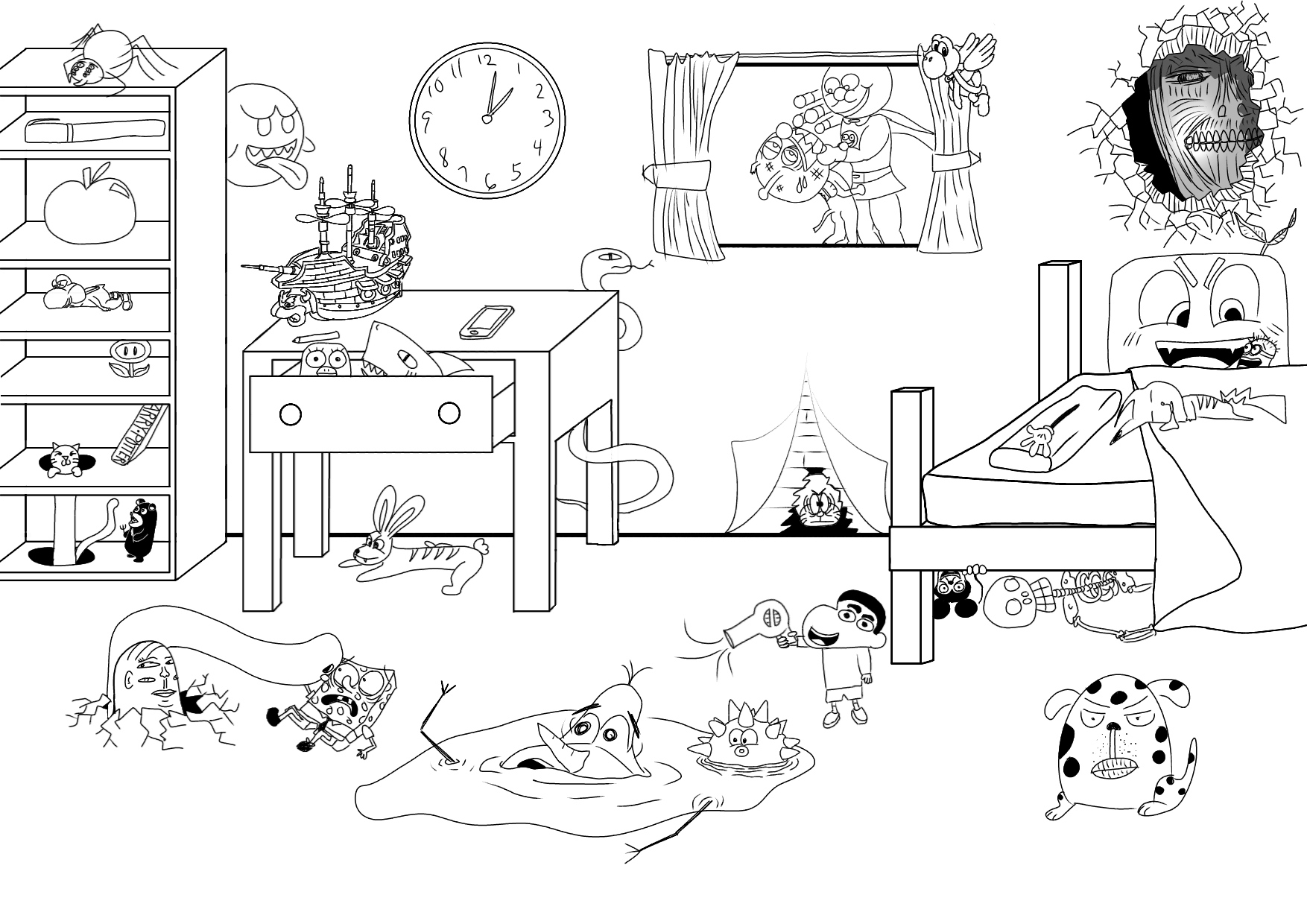
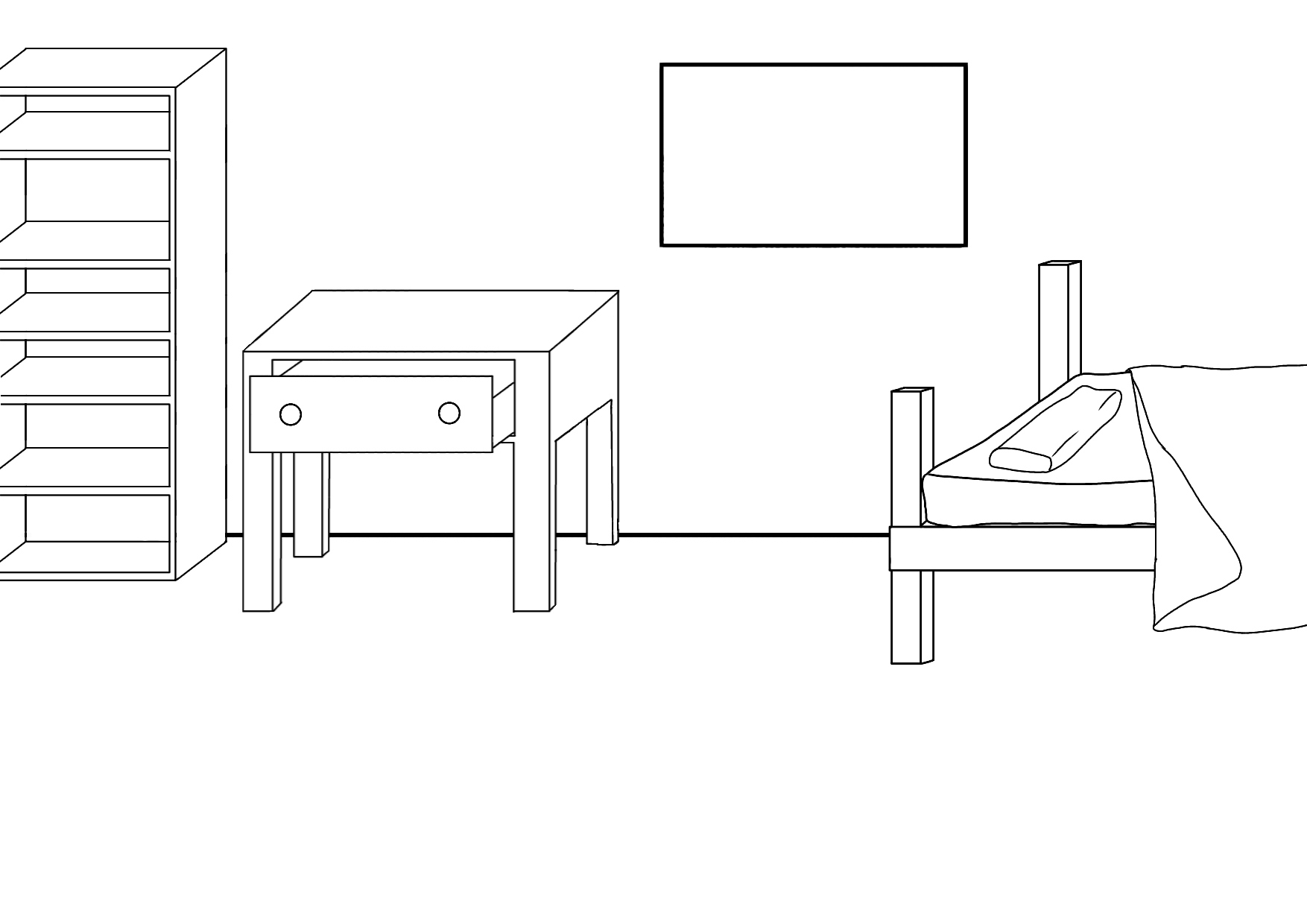
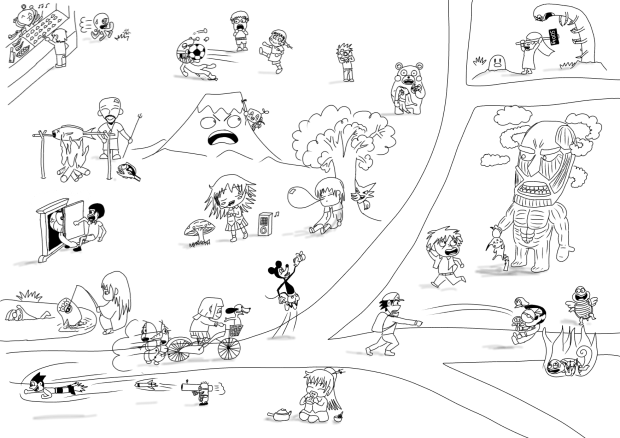
A JTE came up to me and asked me to draw her a picture of a lot of characters mid action for an observation lesson she would have the following month. But she wanted to start working on it so she was hoping I could finish it in the next few days. I drew it out on a large A3 sheet of paper with a pencil and then inked it. After I switched to pen any mistake or change I decided on required me to use whiteout and then run the picture through a copier. Eventually the finished product was scanned so it could be added to worksheets.
That picture proved useful for many different lessons in all grades. I eventually redrew the entire thing in Ibis Paint X on my tablet. Now I offer this drawing and a general lesson plan and a few accompanying worksheets to you.
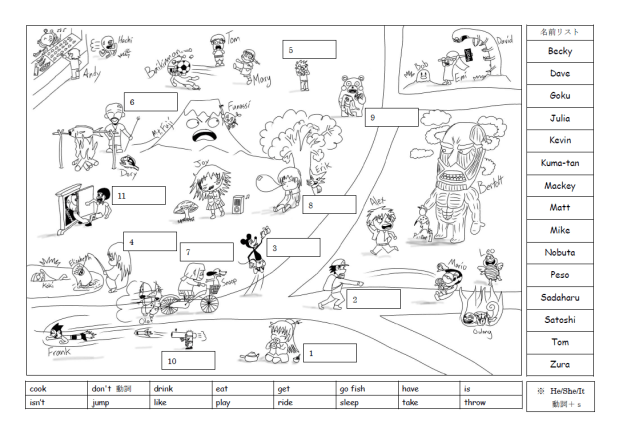
FYI the first two images are png with no background for the most part. So if you’re using a mobile device it may appear mostly black. If you print the image (on white paper) it will be fine. The third image is a jpg so it appears fine.
With names.
Without names.
With 11 blank names, a list of names, and a list of verbs. For the first year activity.
TL:DR Self Introduction lessons should introduce how you teach and that you CAN teach more than it introduces your parent’s house and all the stock photos you could find to convince everyone you used to have friends…
First year students are a lottery. If you’re lucky you’ll get a heads up from the elementary school assistant language teachers (ALTs), the Japanese Teachers of English (JTEs) at your junior high school, or possibly your company or the city BOE. Most of you will have no idea though, especially if you’re a new teacher. So what’s the single most important thing for you? It’s is NOT your first lesson, despite what some companies and ALTs have been trying to tell me for years. The single most important thing is control.
I don’t advise EVER disciplining your students, that’s not your job and doing so could get you in trouble, a lot of trouble. Any and all control you have in a classroom will be won or lost before you set foot in the class. That PowerPoint slide show of your childhood home, abandoned pets, and food you won’t realize you miss until it’s too late and it dawns on you that finding decent bacon in Japan isn’t going to happen… is, in my opinion, worthless fluff that at best will just waste a class period and at worst set you back into a secondary interactive mannequin roll for the rest of the year.
Be a F***ing Teacher
JTEs don’t always trust ALTs to teach. For good reason too, I’ve met other ALTs and not many of them impress me. Possibly, your one and only opportunity to showcase your creativity and ability to teach is that one lesson where you do your “self-introduction.” What if… and I know this will sound crazy to a certain ALT/company who argued with me on this a lot… instead of a slideshow, you run a goddamn lesson. You show the students what it’s like to interact with a foreign native speaker and make the kids excited to interact with you. What if the student’s keep pestering their JTE, asking him or her when your next class is going to be? What if the JTE saw you getting students engaged with English? Wouldn’t that be f@’k!ng insane? But ultimately it’s up to you… you can, for your first lesson with your new JHS students, just download a portion of the internet for them to look at and really showcase those slide swiping skills. Or you can be a teacher.
Maybe I should ask Alexa…
On the use of PowerPoint, (since covid this has changed)
On use of PowerPoint, I am not against it entirely, but it is something that should be used to support your lesson, not be the whole lesson. And I am also leery of technology unless I know for a fact that there were be a low to zero chance of technical difficulties arising.
Not all schools will be very tech savvy. Usually there is one teacher who is the go to guy/gal for that stuff, so if he or she can assist you then great, but if they’re busy will you be able to do it yourself? You need dry runs to make sure you know how to use the equipment.
And school computers aren’t exactly powerhouses either. Did you put animations in your PowerPoint? Did you program some macros? (catch me while I swoon) Did you embed video? Odds are the school computer’s processing is powered by a cockroach on a treadmill.
We updated to windows 10. There seems to be a 5% random chance of the computer refusing to wake up from sleep. That’s better odds than me though…
Or did you make your PowerPoint on your personal computer and then the school informs you that USB sticks are prohibited on school grounds entirely. Or is it like my schools where school computers can only use USBs unsullied by outside devices…
PowerPoint and technology can be an incredibly powerful tool, but it can also be the man-made sh!t creek you get stuck on without a paddle. Understand the limitations and the fail points. My biggest issue was, I wasn’t using PowerPoint during regular lessons because setting it up ate too much class time. And in the 10+ years I’ve got into teaching I’ve only seen one JTE teacher who used PowerPoint. She actually brought her own TV to school and hooked up her iPad to it so it worked really well. If that’s not you though, then using it for your first lesson is a onetime gimmick and unnecessary.
Your first lesson
The first step is making your self-introduction lesson. Personally, I have a few pictures I printed of where I’m from. I don’t like including personal pictures of my family. I do woodworking so I’ll show off some things I’ve built. If you have tangible things those work well too, clothing items, toys, fertility sticks, etc… But I only aim to talk for about 5-15 minutes max. I like to let the students then lead the remainder of the class with Q&A.
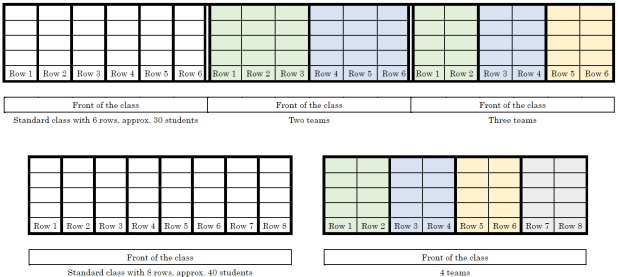
I divide the class into 3-4 teams, if there are 6 columns of students then I’ll make 2 teams by splitting the class in half or 3 teams consisting of 2 columns of students per team, if there are 8 columns then I’ll make 2 or 4 teams similarly.
I will give them 2 minutes to think of questions they want to ask. After each question the student who asked me a question will play rock-paper-scissors with me. If they win their group will get 3 points, if they lose then their group will get 1 point. Points are tracked on the chalkboard. But I tell them that if they can ask me a question in English then the point scale is double, but for today if they ask in Japanese it is fine. For ALTs who don’t speak Japanese your JTE will translate for you. For ALTs who do speak Japanese I still would recommend letting your JTE translate, because it creates a language gap the students should want to cross by using English and it also helps the JTE become involved in this part of the class. I also ask the JTE to pick the students who get to ask questions. This lesson, my aim is to gauge the English level of the classes. Some classes I’ll only get English questions. Some will be mix. Some will be mostly Japanese. I will make note of this and talk to the JTE about my observations.
Communicate
The second step is teamwork. It’s important to explain to your JTE what you’re going to do for the lesson, their role, and your reasoning behind your plan. Instead of the JTE watching you click a mouse, the JTE will understand that you’re not just introducing yourself, you’re also testing each class to check their English speaking level, how well they can work in groups, and how outgoing they are. This is important information for the JTE to figure out as well. It’s not something they will expect you to be thinking about. But they should. And you should.
Good Luck
So, I hope your first lessons go well. Remember, you’re an English teacher and a cultural ambassador. You’re not an English teacher and an [insert your country here] teacher. Yeah, the kids may be interested in your home country, culture, and customs. There is no reason you can’t teach them about any of that. But there’s no reason to try to do that all in one day in your first lesson. You can easily incorporate that into future lessons. I would argue that it would be more memorable if you shared your culture bit-by-bit over their entire 3 years in JHS.
I’ve made a huge mistake…
Lead a boring PowerPoint presentation and you risk the JTE assuming you don’t offer much English educational value. That could result in you standing in the back of the class only coming to life when the JTE asks you to read a passage from the text book. I can’t guarantee this is an avoidable fate. But you can try your best to avoid it.
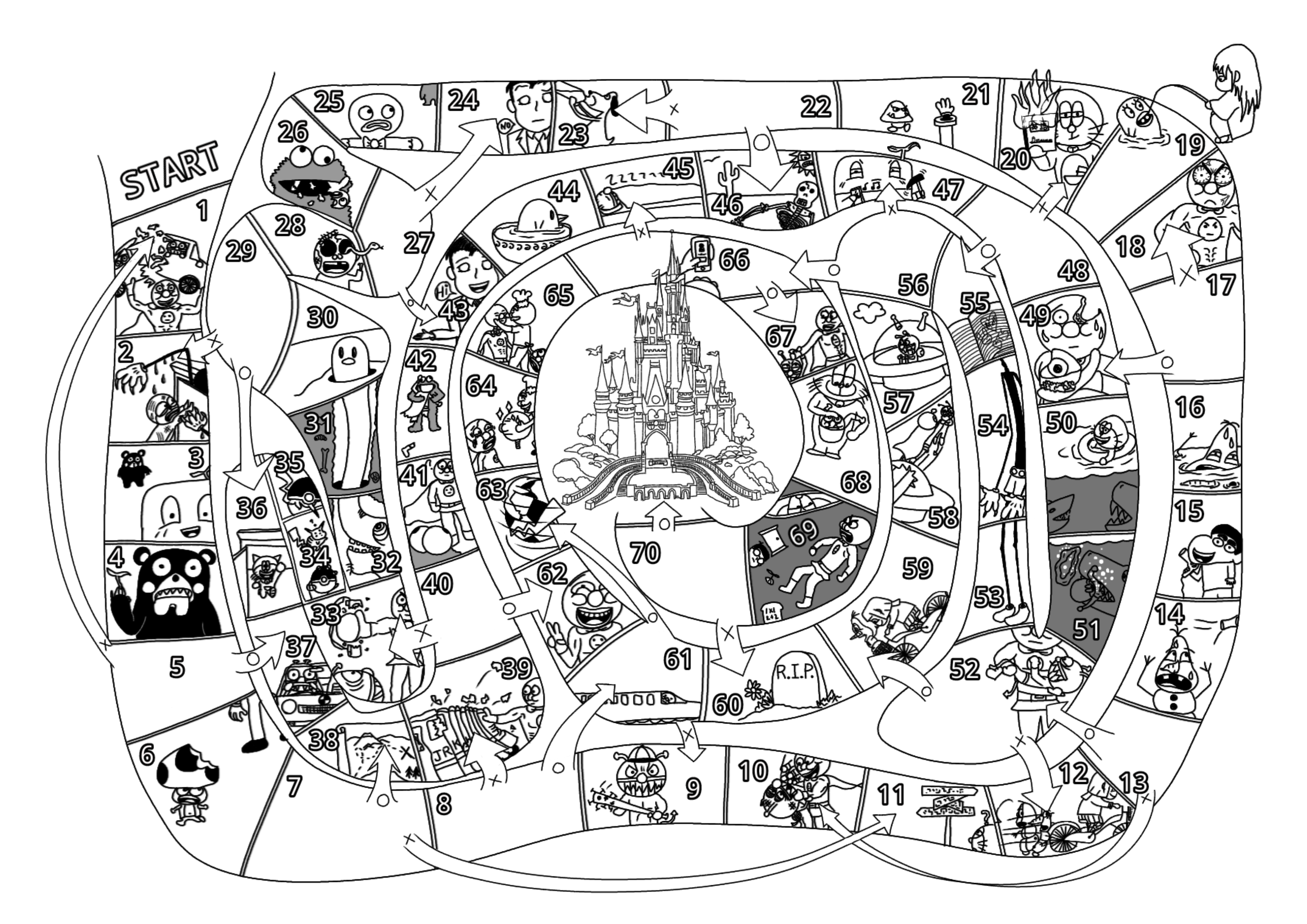
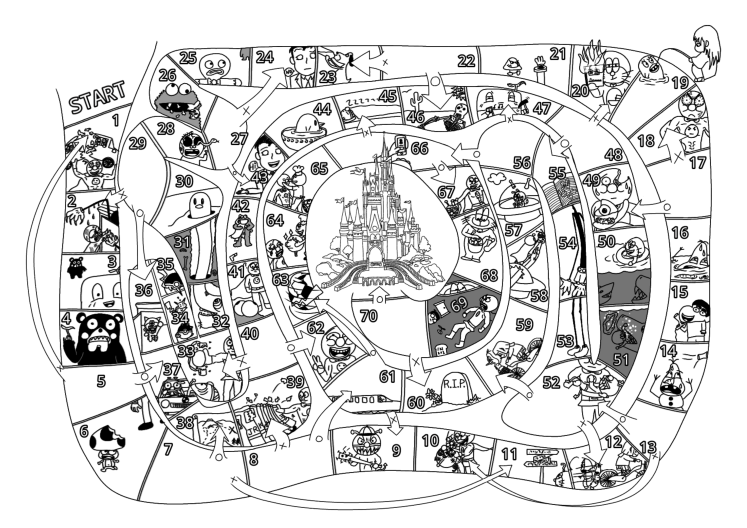
I thought that it would be interesting to see the process I go through taking old materials and digitizing them.
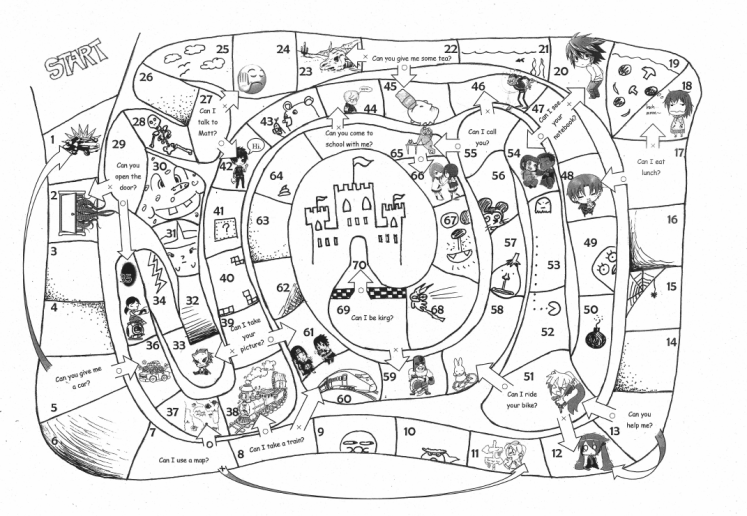
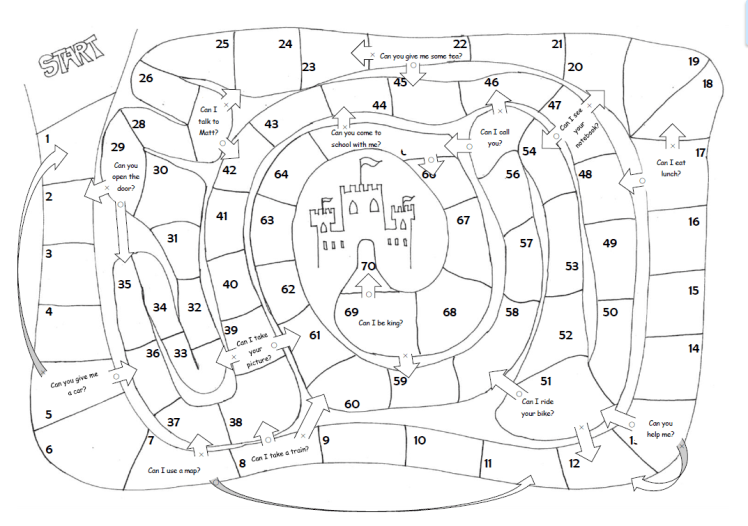
This is the original I made. I hand drew the board and used clip art and MS Word to add grapics, text, and numbers.This is the image without grapics, and this is the one I used as the base for the digital version.
This is a video of me drawing from start to finish on my Samsung tablet. I used an app called Ibis Paint X that is free. All the elements are now hand drawn. Some of the images are from other things I’ve drawn that I then imported and redrew so it would look cohesive. The castle alone I traced from a coloring book image, I can draw decently, but that level of detail would’ve taken me hours to come up with something comparable.
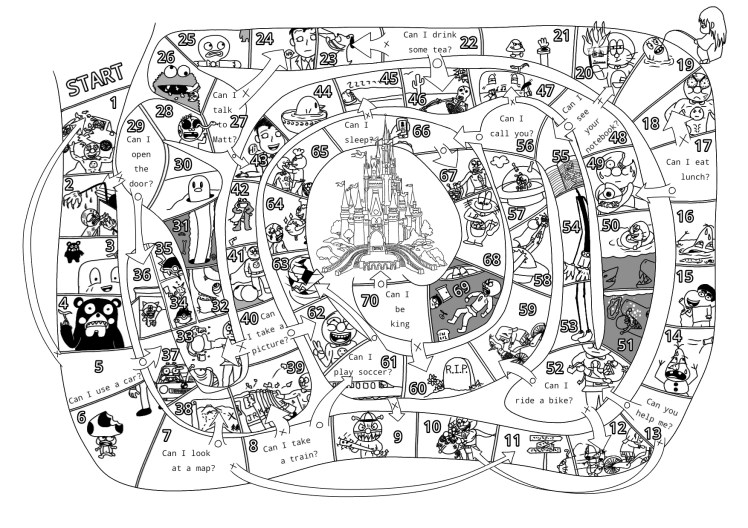
Here is the finished product. Here is a blank template you can fill in your own questions. I would suggest downloading it and then drop it into microsoft word and use text boxes to add your own questions.
How to play the King Game
Here is a detailed lesson plan for the King Game. It can be used for 1st year students studying, “Can I~?” / 2nd year students studying, “May I~?” / and 3rd year students studying, “Could/Would you~?”




 ALT(er)native Teaching